2001: A Space Odyssey Analysis: Stanley Kubrick and the Dawn of Man
Space travel is usually portrayed as an action packed adventure, but this film treats it like a terrifying, silent ballet. Released back in 1968, director Stanley Kubrick crafted a groundbreaking cinematic masterpiece that completely changed the science fiction genre forever. You follow Keir Dullea as astronaut Dave Bowman and Gary Lockwood as Frank Poole on a highly classified mission to Jupiter, completely isolated in deep space with only a highly advanced artificial intelligence named HAL 9000 to manage their massive ship. I always recommend this philosophical epic to anyone seeking a truly immersive experience that relies on visual storytelling rather than heavy exposition. It throws you right into a realistic, painfully slow journey across the solar system while asking terrifying questions about human evolution and the dangers of technology. You quickly get swept up in the incredible practical effects and the hauntingly quiet atmosphere of the cosmos. Looking beneath the pristine white spacesuits and classical music exposes the actual mechanics of the script. A structural analysis reveals that every seemingly spontaneous argument between the desperate astronaut and the malfunctioning computer is carefully timed to mirror their deeply rooted, inescapable similarities.

The Visual Style and Cinematography of the Cosmos
For the visual aesthetic, cinematographer Geoffrey Unsworth relies entirely on stark, meticulous contrast between brightly lit spaceship interiors and the absolute darkness of space. You instantly notice how the massive rotating centrifuge inside the Discovery One makes the spacecraft look like a beautiful, terrifying mechanical womb bathed in harsh white light. I do have to admit that the lighting choices become genuinely frustrating whenever the characters conduct maintenance outside the ship in the endless void. Hiding the actors in extremely dark shadows against the pitch black background makes those crucial spacewalk sequences look a bit too murky instead of properly awe inspiring. Stepping back into the bright red glow of the artificial intelligence core thankfully restores a striking, terrifying visual clarity. Visually softening the brutal reality of interstellar isolation, the psychedelic color grading during the final star gate sequence also reflects a desperate wish to transcend normal human limitations.

Production Design and the Architecture of Tomorrow
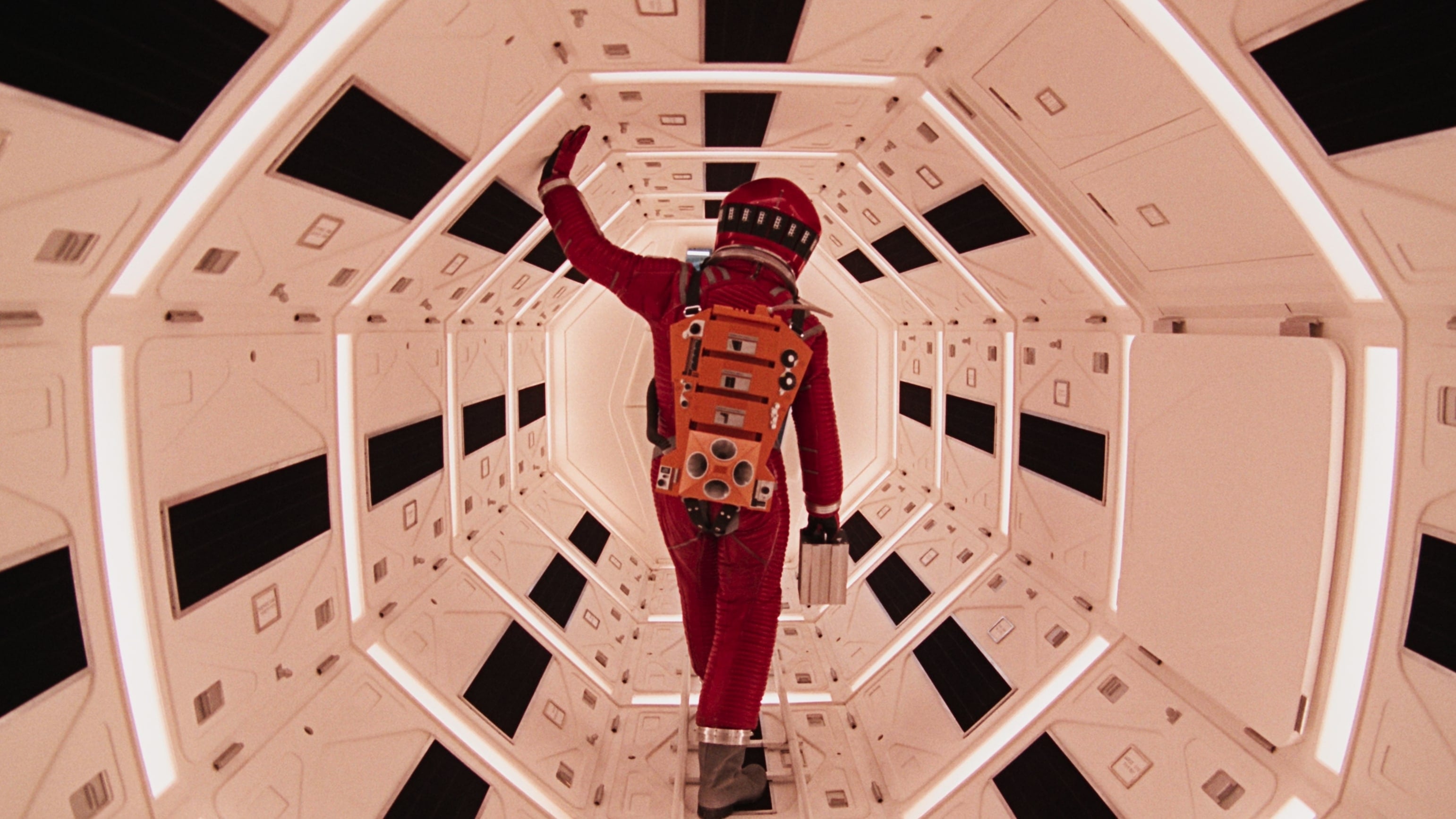
Pay close attention to the set design and you will see how the physical environments are built to completely dwarf the human characters. The chaotic interior of the ancient African desert feels incredibly authentic because the dusty rocks and dry landscape perfectly match a primitive species struggling to survive. A visit to the pristine white corridors of the orbiting space station leaves a completely different impression entirely, as those perfectly aligned curved hallways come off almost like a sterile luxury hotel disconnected from real human emotion. My biggest complaint actually centers on the lunar excavation site because the smooth dirt pit looks a bit too cleanly arranged for a supposedly secret alien discovery. Still, forcing these quiet astronauts to constantly bump elbows in tight pod capsules makes their mounting paranoia feel very tangible.

Sound Design and the Editing Pacing
To truly understand the isolating weight of this mission, you have to listen to the incredibly tense pockets of complete silence echoing in the vacuum of space. My ears constantly pick up the heavy, rhythmic breathing inside a spacesuit blending right into the cold, mechanical hum of the life support systems. Throughout the most intense confrontation sequences, the editing moves at a bizarrely slow, deliberate pace that allows every single calculated action to feel agonizingly real. The director famously abandoned a traditional original score, opting instead for booming classical music by Richard Strauss and Johann Strauss II, yet it occasionally threatens to make the slow docking sequences feel a little too much like an overwhelming orchestral concert. Hearing the loud mechanical click of a memory module shutting down actually grounds the extravagant science fiction style.

Frequently Asked Questions About 2001: A Space Odyssey
Before we get to the final rating, let us clear up some common mysteries surrounding this iconic cinematic epic.
Is the movie based on a book? The film and the novel were actually created concurrently, with Stanley Kubrick collaborating directly with legendary science fiction author Arthur C. Clarke to develop the story simultaneously.
Did they use computer graphics for the special effects? No, the film was released long before digital effects existed, relying entirely on revolutionary practical models, slit scan photography, and massive rotating sets to create the flawless illusion of space travel.
What does the surreal ending actually mean? The final act intentionally avoids any clear explanation, leaving audiences to interpret the rebirth of the main character as a metaphorical leap in human evolution guided by an unseen extraterrestrial intelligence.

The Flickle Visual Score: 9.9/10
The incredible practical effects and the terrifying villain keep me completely hooked, but I cannot ignore how demanding the lengthy runtime is for modern viewers. Certain silent sequences linger so aggressively that you practically have to strain your patience to maintain focus on the core narrative.
Fans of a challenging movie trivia challenge will definitely appreciate the hidden visual details scattered throughout these sterile spaceships. If you think you have the eye to spot the glowing red camera lens in our daily guess the game or simply want to engage in a fun trivia game based on visual clues then test your skills at Flickle.

Mastered the Frame?
Test your visual memory and see if you can guess this movie in 6 frames.
Solve Today's Puzzle